|
We're going to
start this month's What's New section with
reviews of albums from three very fine woman
blues artists. Enjoy!
 This
one really knocked me out, in part because I had
never before heard of Miss Robin Banks. A
native of Ontario, Canada, Ms. Banks headed to
the state of Texas, a place in which she spent
some time earlier in her life, to record her
latest album, Lost In Austin (Dallas
Blues Society Records). This
one really knocked me out, in part because I had
never before heard of Miss Robin Banks. A
native of Ontario, Canada, Ms. Banks headed to
the state of Texas, a place in which she spent
some time earlier in her life, to record her
latest album, Lost In Austin (Dallas
Blues Society Records).
While in Austin she recruited long-time Texas
blues buds Johnny Moeller (guitar), brother
Jason Moeller (drums), and Drew Allain
(bass) to back her on all cuts. Also
contributing their talents were Steve Marriner
(harmonica), Roly Platt (harmonica), Bruce Bears
(keyboards), and Dale Rivard (pedal steel).
For
an album that reportedly was financed and pulled
together on the fly, Banks and pals have
produced a very fine, cohesive collection of 10
songs, eight originals and two well-chosen
covers. Her pleasant voice is obvious and the
listener can easily pick up on her confidence in
the studio.
Banks shows us her feisty side on the opening
cut, the up-tempo shuffling soulful blues, "Not
Today," as she sings that she's going to get
right into that man's face by telling him his
wishes are NOT going to come true today. Bears
gives us a nice piano solo and Johnny Moeller
immediately shows his prodigious talents on
guitar. That leads into an up-tempo blues
rocker, "Supersonic Rocket Ship," highlighted by
Moeller's jangly guitar work and a strong
harmonica solo by one of our two harp
contributors.
"It's My Time" has Banks proclaiming to all that
she's going to sing what she wants to sing, with
her vocal assertiveness coming on top of a
mid-tempo blues shuffle beat. She gets topical
on the up-tempo blues number, "Modern Man," as
she laments about the state of our current
civilization and wondering how we got where
we're at now. Bears plays tasty organ
throughout, including a killer solo.
Her
worries are focused on her love life on "These
Days," as she puts extra power into the vocals
while starting to wonder whether things will be
better when he's gone. Very nice chromatic
harmonica work adds to this tune.
Adding Rivard on pedal steel turns the up-tempo
"It's Too Late" into more of a western swing
thing, continuing the theme from the previous
cut as she tells the man that it's too late for
him to love her. Moeller complements the pedal
steel work with his own versatile guitar
picking.
Banks gets defiant again on the next cut, as she
defends the honor of her native country on the
slow number, "Never 51/Maple Leave It Alone."
Bears accentuates the message with a strong
organ solo.
We
get the first of two covers on the Freddie King
funky blues, "Some Other Day Some Other Time,"
something she often hears whenever she's looking
for love. Moeller lays down plenty of very fine
guitar work, connecting often with Banks'
vocals.
Another cover is the slow blues, "Cold Cold
Feelin'," written by Jessie Mae Robinson and
covered by blues icons T-Bone Walker, Albert
Collins, and others. Banks sings forcefully from
the heart here, with plenty of powerful emotion
coming from her vocal cords.
Closing the album is the slow, funky blues,
"Talk Dirty To Ya," Banks' own old-school
double-entendre instant classic. I love it!
That
last statement sums up how I feel about all ten
cuts on Lost In Austin. I hope it's not
long before Banks makes another trip to the Lone
Star capital to record even more outstanding
blues.
--- Bill Mitchell
 In
the July issue of Blues Bytes we
reviewed
a very fine album from Florida group The Shaelyn
Band. It turns out there's a connection between
that band and our next group to feature, Kat
Riggins and her Blues Reviival. We've been
aware of Ms. Riggins for quite some time, as her
powerful vocals have made her a favorite with
Blues Bytes readers and listeners. In
the July issue of Blues Bytes we
reviewed
a very fine album from Florida group The Shaelyn
Band. It turns out there's a connection between
that band and our next group to feature, Kat
Riggins and her Blues Reviival. We've been
aware of Ms. Riggins for quite some time, as her
powerful vocals have made her a favorite with
Blues Bytes readers and listeners.
Everyday Is Saturday (House Of Berry
Productions) is produced by Tim Mulberry, a
producer and key member for The Shaelyn Band,
and he also plays many of the instruments behind
Ms. Riggins.
But
make no mistake, Everyday Is Saturday is
Kat's show all the way, with her powerfully
sassy vocals highlighting each of the 10 cuts.
She's a dynamic performer, both live and in the
studio, and her music goes right to the soul of
each listener.
Riggins goes totally slamma jamma on us to start
the album (that's one of my expressions when
watching basketball, but it seems to fit here,
too), with the up-tempo shuffle "Heads Are Gonna
Roll." Her voice gets stronger as the song goes
on, complemented by the very fine guitar work
Erik Guess. The energy continues on the funky
"Do My Thang," as Riggins frequently repeats the
main theme of "...I can't stop my feet, and my
hips aren't far behind ..."
The
pace continues on the up-tempo blues stomper "I
Say So," with Guess' nimble guitar gymnastics
dominating throughout the song. Riggins eminds
us very clearly who she is, singing "...I'm a
god-made, bonafide, one of a kind ..." We
finally get to catch a breath on the slow
motivational number, "Ain't Goin' Down," with
more solid blues guitar work from Guess.
Riggins aims her criticism at someone carrying a
gun for nefarious purposes on the mid-tempo
funky blues, "Tears Life Gasoline," with Shaelyn
Mulberry contributing backing vocals. It's off
to that backwoods church on "Holy Water," with
Riggins repeating the line "...holy water, make
me over ...," accentuated by eerie slide guitar
from Guess and backing vocals from both
Mulberrys.
Riggins tells us that she's got dreams that she
can make come true on the inspirational "Fear
Slayer," a mid-tempo blues that again brings in
the Mulberrys on backing and harmony vocals. It
gets funky on "Til the Lights Come On," which is
how Riggins and friends are going to be dancing
to every song. She sings that they are putting
the boogie in the woogie and the rock in the
roll. Just a fun tune that captures the theme of
the album title. The tempo slows towards the
end, because quite frankly, those dancers are
getting tired.
"Hunger Games" has a bit of a reggae beat as she
portrays her own relationships as personal
hunger games, reminding that you lose more than
you win. The song ends with Riggins' frantic cry
of "... hunger games! ..."
Riggins closes with another powerfully
inspirational song, "Live In Peace," with organ
and backing singers helping her take it to
church to deliver this very important message.
Everyday Is Saturday is another winner for
the charismatic and very talented Kat Riggins.
Her music is comfort food for the soul. You'll
love it. Take my word for it.
--- Bill Mitchell
 Brigitte
Purdy is a very fine singer/songwriter from
Los Angeles, whose 2018 album,
Still I Rise, was reviewed in Blues
Bytes back then, as well as a single, "Stylin',"
covered on these pages in 2021. We missed
reviewing her outstanding 2022 single, a breathy
version of "I Just Want To Make Love To You." Brigitte
Purdy is a very fine singer/songwriter from
Los Angeles, whose 2018 album,
Still I Rise, was reviewed in Blues
Bytes back then, as well as a single, "Stylin',"
covered on these pages in 2021. We missed
reviewing her outstanding 2022 single, a breathy
version of "I Just Want To Make Love To You."
Purdy hasn't been a stranger to the pages of
Blues Bytes, and we're glad to make you aware of
her latest LP, Mother of the Crossroads.(Dirtshack
Records). It's an excellent addition to her
discography.
Purdy's regular musical partner, Dave Osti,
produced the album and played many of the
instruments backing her powerful, melodic voice.
It's a mix of blues, blues/rock, jazz, soul and
a lot of other influences shining through.
Up
first is "Sugar Fried Candy," a mid-tempo
blues/rock number, introduced first by Osti's
piano before he comes in with strong guitar.
"Blues Collar Woman" starts with some snaky
chords before turning into a funky blues, with
Purdy's voice getting stronger as the song
progresses.
My
favorite cut, "Memphis Hotline," starts with
tasty blues guitar before the pace picks up and
turns the song into a rockin' blues shuffle.
Osti turns in a wonderful organ solo halfway
through the song.
The
title cut is jazzy and funky, with Purdy's
scatting vocals giving the song a mysterious
vibe. Osti switches to more of an acoustic sound
on guitar, with an especially tasteful slide
solo, on "Losin' Time For Love," as Purdy sings
that we're gambling on our future and running
out of time for love.
Purdy's soul side comes out on the inspirational
"Make Love Higher," with Drake Shining
accompanying on churchy-sounding organ while
Osti settles into the background with acoustic
piano. Her voice gets more powerful as the song
goes on, accentuated by a killer slide guitar
solo. This one's another keeper.
We
move more to the country side on "Too Full Of
You," as Purdy sings "... you can't have me when
you're too full of you ...," with Osti using his
slide to great effect. "Come To Mama" is not the
Koko Taylor song by the same name, but instead
Purdy's own up-tempo blues rocker, with heavy
guitar from Osti and harmonica from guest
Michael Fell.
Closing the album is a mid-tempo blues/rock,
"Rise Like The Water," with outstanding organ
accompaniment from Shining. This powerful song
comes to an end with a stirring crescendo of
background vocals provided by Purdy, Osti, and
Shining, repetitively singing "...rise like the
water, gotta let it breathe..." A strong ending
to a short but memorable album.
If
this is your introduction to the music of
Brigitte Purdy, Mother of the Crossroads
is a good pace to start but with plenty of music
from her past also available.
--- Bill Mitchell
 All
Before Yesterday (New Folk Records) is a
two-disc, career-spanning retrospective of slide
guitarist extraordinaire P.K. Mayo. Mayo
had played for a huge number of blues, rock, and
jazz artists, the blues artists including Jonny
Lang, Tracy Nelson, Shannon Curfman, Terry
Evans, Big Walter Smith, Bernard Allison, and
Mark Naftalin. All
Before Yesterday (New Folk Records) is a
two-disc, career-spanning retrospective of slide
guitarist extraordinaire P.K. Mayo. Mayo
had played for a huge number of blues, rock, and
jazz artists, the blues artists including Jonny
Lang, Tracy Nelson, Shannon Curfman, Terry
Evans, Big Walter Smith, Bernard Allison, and
Mark Naftalin.
Most
recently, he's been the slide guitarist behind
two-time Grammy winner Dante Bowe. He's also
released multiple albums (some under his real
name, Paul Mayasich) since around 2000.
This
collection captures 23 tracks from Mayo's
previous releases. There's no session
information about when each song was recorded,
and musicians are listed as a group in the liner
notes. The group is a pretty impressive lot,
some of the names familiar to blues fans include
Jimi “Primetime” Smith, Leland Sklar, and Sam
Bush. Producers include Mayo, Bowe, and Jim
Gaines.
Although the songs were recorded at different
times with different personnel, listeners won't
even notice any difference in quality at all.
Disc one opens with an up-tempo take on K.C.
Douglas' “Mercury Blues,” where Mayo provides
percussive acoustic guitar work that reminded me
a bit of Bukka White's early recordings and a
bit of an eastern vibe in the melody. The
soulful “Tell Me” is a funky blues with fine
slide guitar from Mayo, and “Prisoner” continues
the funk with more of a rock edge in the guitar
work.
“Be
An Angel” is an acoustic ballad (that plugs in
during the final third) with spooky slide guitar
and piano and drum accompaniment. “Too Gone” is
a rootsy slow burner with Americana-flavor and
clean slide guitar, while the amusing “Jelly
Smackin' Mama” is an old fashioned country blues
with steel guitar and piano.
“Love For Money” is a loose-limbed blues tune
with a funky rhythm and strong fret work and
“Texas Toast” is a briskly-paced, roadhouse
rocking tune that serves as a cousin of sorts to
the classic “High Heel Sneakers.”
“Somewhere In The Night” is a smoky, urban blues
ballad loaded with splendid guitar work from
Mayo, “That Man” is a soul burner with a greasy
Memphis feel, thanks to the greasy B3and jangly
rhythm guitar, powered by Mayo's superb slide
guitar runs, and “The Road Behind” is a
reflective country-styled ballad.
The
first disc concludes with a masterful slide
guitar-driven instrumental version of “Amazing
Grace.”
Disc
two opens with “Black Coffee,” a moody blues
piece with great soaring slide guitar that could
go on forever – it's a shame that this one had
to end. “Good Man Blues” follows, a gritty blues
shuffle, then the acoustic country blues “BBQ
Mama,” which has a real vintage feel.
“Fishin' Fool” is a cool swamp blues in the Slim
Harpo tradition at its heart with updated
instrumentation and spacey guitar work from
Mayo. “Vidalia, Georgia” is a sweet country
ballad that tells the tale of a young girl
leaving home to go cross-country looking for
love.
“Campaign Road” is a lovely instrumental with
beautiful guitar work, another track that you
hate to hear come to a conclusion. “Gimme A
Break (Bartender)” is a jaunty rocker with
dazzling piano work and horns that finds Mayo
trying to make his move on a potential overnight
spouse before it's too late.
“Devil's Face” is a haunting blues rocker with
distorted guitar and vocals that covers a
traditional blues topic with chilling effect.
“Watch Out Boy” and “Road Of Love” are both
country-flavored ballads that provide a nice
showcase for Mayo's vocals and songwriting.
Disc
two concludes with “Arms Of The Blues,” a slow
burning blues that stretches out over nine and a
half minutes, offering ample time for Mayo's
excellent guitar work and vocals.
All Before Yesterday is loaded with powerful
music that should definitely be heard by blues
fans, especially slide guitar fans. P.K. Mayo is
the real deal as a guitarist, singer,
interpreter, and songwriter.
This
wonderful collection is a perfect way to get on
board with this talented artist.
--- Graham Clarke
 Monterey,
California-based
singer/guitarist Brad “Guitar” Wilson
recently issued Boundless (Cali Bee
Records), containing a whopping 16 tracks, 12
written by Wilson with four intriguing cover
tunes. Wilson handles all guitar (after all,
“Guitar” is his middle name) and vocals, and is
backed by drummers Toto Poznantek, Chris Ross,
or Adam Gust, keyboardist Chris Rhyne, Luca
Catalfamo, or Frankie Vriens, bassists Hal
Cragin, Brian Beal, or Fabrizo Erba, Francis
Buckley on synth bass and percussion, and
backing vocalists Paulina Campos and Valerie
Chanelle. Monterey,
California-based
singer/guitarist Brad “Guitar” Wilson
recently issued Boundless (Cali Bee
Records), containing a whopping 16 tracks, 12
written by Wilson with four intriguing cover
tunes. Wilson handles all guitar (after all,
“Guitar” is his middle name) and vocals, and is
backed by drummers Toto Poznantek, Chris Ross,
or Adam Gust, keyboardist Chris Rhyne, Luca
Catalfamo, or Frankie Vriens, bassists Hal
Cragin, Brian Beal, or Fabrizo Erba, Francis
Buckley on synth bass and percussion, and
backing vocalists Paulina Campos and Valerie
Chanelle.
The opener is the
B.B. King standard “The Thrill is Gone,” and
it's a bit slicker than the original, which is
not really a bad thing because Wilson offers
clean, precise fretwork and a smooth vocal that
work well. The first original follows, “More of
You,” which has a catchy pop feel with catchy
lyrics and a solid groove.
“Hit The Road
Jack,” the Percy Mayfield classic, gets an
interesting interpretation, a funky, swinging
rhythm with vocals to match by Wilson, supported
by Campos and Chanelle. “Gonna Stay or Go” is a
high-powered, soulful rocker.
“Living
Underground” was inspired by the war in Ukraine,
capturing the feeling of fear and loss that's a
regular part of life for the people in that
country, and the cover of Tears For Fears'
“Everybody Wants to Rule the World” is well-done
and about as bluesy as it could possibly get
with Wilson's guitar work.
“Let's Dance
Tonight” is a lively rock 'n' roller with crisp
fretwork and dazzling work on the ivories, “Wild
and Free” is a nice Southern rocker, and “Home”
is an upbeat acoustic number that leans toward
folk.
“Time Was” is an
easygoing, reflective tune recalling simpler
times, and “San Francisco Nights” is a soulful
jazz number with sweet background vocals.
“Sundown and the Cowboy” recalls the
country-rock hits of the '70s.
“Sky Full of
Rain” is a great blues-based ballad with strong
vocals and guitar from Wilson, “Between the
Hours” has a vintage British blues rock vibe,
and “Blues Magic” is a mid-tempo blues track
with a smooth rhythm and sharp fret work.
The album closer
is a fine cover of the pop classic “Cry Me a
River,” again with stellar vocals and guitar
from Wilson.
Boundless
is another impressive release from Brad “Guitar”
Wilson that demonstrates his talent and ability
to excel in a variety of styles while managing
to keep one foot in the blues.
--- Graham Clarke
 We've
known about Blues Now (New West Records)
by GA-20 with Charlie Musselwhite for
several months, with multiple singles being
released in advance of the album. But now the
whole package is here, and the wait was well
worth it. We've
known about Blues Now (New West Records)
by GA-20 with Charlie Musselwhite for
several months, with multiple singles being
released in advance of the album. But now the
whole package is here, and the wait was well
worth it.
You've likely heard from GA-20 before, those
hardcore New England blues cats a true blues
power trio, led by guitarist and founder Matthew
Stubbs, . Recent additions to the band are
vocalist/guitarist Cody Nilsen and drummer
Joshua Kiggans.
But
the best addition for this album is honored
guest and legendary harmonica player Charlie
Musselwhite, with whom Stubbs toured for a
decade or so, making for an even more cohesive
sound due to their familiarity with each other.
A genius concept for GA-20's latest album.
Launching this album of wild Southside Chicago
blues is the Willie Dixon composition "Crazy
Love," with Nilsen introducing the set by
singing that we're going to have a crazy time
with crazy music for you. Stubbs first lays down
a smokin' guitar solo followed by Musselwhite
with a soaring harmonica solo. Whew! The cat can
still blow the blues harp. Up next is another
Dixon number, "Talk To Me Baby," this time with
Musselwhite taking the vocals and Stubbs doing
his best Elmore James impression on slide
guitar.
"I'll Change My Style" is a complete turnaround
for this band, with Musselwhite tastefully
sending out wonderful harmonica solos on this
Jimmy Reed number. It's a slow blues that has a
bigger dose of soul than the original, thanks in
part to Nilsen's tender vocals. The two singers
join together on the slow Tampa Red blues, "Big
Stars Falling," with Musselwhite's vocals and
harmonica both standing out.
"Universal Rock" takes us back to early '60s
Chicago blues, a frantic instrumental done back
in the day by Earl Hooker and Junior Wells.
Musselwhite lays down one of his best harp solos
followed by a breathtakingly rapid guitar solo
from Stubbs. Our big star is back on vocals on
the Otis Spann slow blues, "Blues Will Never
Die," a song absolutely packed with emotion.
This comment is redundant, but of course there's
more sterling harmonica playing from Musselwhite.
Charlie shows off his songwriting chops on
"Strange Land," one that he first recorded
nearly 60 years ago, an up-tempo blues that
allow him to show his familiarity with the tune
on both vocals and harmonica. That's followed by
an Eddie Taylor song, "Stroll Out West," a
mid-tempo blues shuffle showing Nilsen's ability
on vocals.
"Short Dress Woman" is an up-tempo blues classic
that we've all heard many times by Muddy Waters,
written by Lafayette Leake. Stubbs lays down
top-notch, fast-paced slider guitar while
Musselwhite shouts out the vocals about the
woman whose dress comes way up above her knees.
Blues Now wraps up with a song done
frequently by Musselwhite, the harmonica
instrumental "Cristo Redentor," written many
years ago by Duke Pearson and a 1964 hit for
Donald Byrd. The original was inspired by
the
Christ the Redeemer statue in Rio
de Janeiro, and over the years the song's been
connected to Musselwhite more than anyone else.
He's recorded it both under the "Cristo Redentor"
title as well as "Christo Redemptor."
Regardless, it's an extremely stirring and
intense harmonica showcase. A fantastic ending
to this potentially award-winning album.
This one's a keeper. Get it now
and play it often.
--- Bill Mitchell
 Souvenirs
(Fort Sumner Music, LLC) is the latest release
from Doug Duffey and BADD. As on his
previous releases, Duffey's musical approach
incorporates Louisiana and delta blues with soul
and swampy funk (he describes it as “Swampadelic”). Souvenirs
(Fort Sumner Music, LLC) is the latest release
from Doug Duffey and BADD. As on his
previous releases, Duffey's musical approach
incorporates Louisiana and delta blues with soul
and swampy funk (he describes it as “Swampadelic”).
Duffey (vocals/keyboards), Dan Sumner
(guitars/bass/vocals/percussion), Adam Ryland
(drums/percussion), and Benjamin Ford (bass) are
joined on selected tracks by Matt Morgan
(mandolin), Mason Howard (accordion), Bob Dowell
(trombone), Bert Windham and Cody Heath
(trumpets), Nate Johnson (tenor sax), Wes
Rougeou (sousaphone), and backing vocalists
Betsy Shirley and Naomi Holder.
Duffey and Sumner wrote all nine of the track on
Souvenirs. The opening track, “Broken Heart and
Empty Hand,” is a relaxed blues with a bit of a
swing to the rhythm and fine fretwork from
Sumner as Duffey laments one that got away,
feeling responsibility for the end.
The
funky “Bad Luck” takes on a familiar blues topic
but adds a fresh tact to the subject, and
“Better By Me” is an interesting blues rocker
that works around Sumner's crisp guitar line,
Ford's driving bass line, and Duffey's B3.
“Delta Melody” is a beautiful ballad with a
soulful vocal from Duffey that would have been a
snug fit on '70s radio. “Axe Jes Rite” is a
sweaty piece of swamp blues that takes its time
and settles into a greasy, gritty groove.
“Sinking Into the Blues” is a sharp blues
shuffle with jaunty barrelhouse piano from
Duffey. Meanwhile, “Love Song” is an upbeat old
school rocker that praises the power of love.
The
title track is a gentle Americana track, with
Morgan's mandolin figuring prominently, as the
lyrics describes leaving the past behind when
it's your time to move on at the end.
The
closer, “Don't Let The Darkness In,” starts with
a gently strummed guitar before the horns come
in. Duffey fights to keep the dark things back
in his soul as the horns drive the track to a
rousing conclusion.
Doug
Duffey and BADD (the band name is taken from the
first name of each of the band members) always
provide a great set of Louisiana-based blues and
roots that is “Swampadelic” indeed. Souvenirs
is highly recommended to fans of Gulf Coast
blues and soul.
--- Graham Clarke
 I
was a bit of a late arrival to the music of the
Grateful Dead, arriving about the time that
“Touch of Grey” was on the radio and the record
charts. At the time, I didn't dig much deeper
than their In The Dark album (which I did
enjoy), intimidated by the mass quantity of Dead
recordings to choose from. I
was a bit of a late arrival to the music of the
Grateful Dead, arriving about the time that
“Touch of Grey” was on the radio and the record
charts. At the time, I didn't dig much deeper
than their In The Dark album (which I did
enjoy), intimidated by the mass quantity of Dead
recordings to choose from.
But
about ten years ago, I decided to take a dive
and really came to appreciate the band's mix of
blues, soul, jazz, country, bluegrass, folk,
rock, and just about every other genre of music,
all fused with psychedelia.
Guitarist J.P Reali was hooked after
hearing his babysitter's copy of Shakedown
Street when he was a kid and attending
numerous Dead concerts as an aspiring musician
and audio engineering student.
His
parents were also Grateful Dead fans, with Reali
growing up listening to a record collection that
included Chuck Berry, Johnny Cash, and a mess of
blues, so the attraction to the Dead made sense
if you think about it.
Reali recently released Grateful Blues (Reali
Records), a six-song EP collecting a couple of
fan favorites and a few deep cuts, all firmly
rooted in the blues.
Robert Hunter and Ron “Pigpen” McKernan's “East
Wind” opens the disc, from 1970's
Workingman's Dead, and it swings a bit more
than the Dead's version with nice contributions
on keyboards from Rich Budesa and sharp fretwork
from Reali.
Hunter and Jerry Garcia's “Loose Lucy” is one of
the Dead's lesser-known tunes, from 1974's From
the Mars Hotel album, Reali's version
plays closely to the original, not quite as
funky but more of a blues rock style, with Trina
Meade filling for Donna Jean Godchaux on backing
vocals and Budesa giving it his all on the
ivories.
Hunter and Garcia's “West L.A. Fade Away” was
one of my favorite tracks on 1987's In The
Dark, and Reali really brings out the blues
shadings on his version, providing crisp guitar
throughout.
Bob
Weir and longtime collaborator John Perry
Barlow's “I Need a Miracle,” from 1978's
Shakedown Street, gets a Texas roadhouse
shuffle treatment, with Reali's vocal a pretty
close match for Weir's. This song gives a nod to
“Bertha” as it wraps, similar to many of the
Dead's shows of the '70s.
“Mr.
Charlie,” written by Hunter and McKernan and
first heard on the Dead's live Europe '72
set, really gets down into the blues with
terrific, gritty slide guitar and a Delta
blues-based arrangement that pays tribute to
Robert Johnson.
The
closer, Hunter and Garcia's “Tennessee Jed,”
also first appeared on Europe '72, with
Reali's version taking a jaunty, acoustic
Piedmont blues approach that works very well.
J.P.
Reali brings out the blues on these six Grateful
Dead tunes, making Grateful Blues a
release that could possibly send blues fans
digging into the Dead's vast archive of
recordings, an endeavor that most listeners
would find rewarding.
--- Graham Clarke
 The
musical duo Lance and Lea crossed paths
in Nashville, with Lance (Kotara) a Texas
guitarist raised on the blues and rock 'n' roll
and Lea (Kaufman) from Colorado with roots in
the church and steeped in country and Americana.
Their music is a combination of blues and roots. The
musical duo Lance and Lea crossed paths
in Nashville, with Lance (Kotara) a Texas
guitarist raised on the blues and rock 'n' roll
and Lea (Kaufman) from Colorado with roots in
the church and steeped in country and Americana.
Their music is a combination of blues and roots.
They
have received the New Artist of the Year at the
iHeart Radio RMCMA's and were in the semi-finals
of the 2022 American Songwriter Song Contest,
while releasing three fan-funded albums that
were well-received and having one song featured
in the TV series The Rainmaker on the USA
Network.
Their most recent release is Blues For
Breakfast, an EP that features five tracks
written by the duo. Lance and producer Evan
Sieling handle the acoustic and electric
guitars, with backing from Peter Wilson
(drums/percussion), Christian Harger (bass),
Kiran Gupta (B3). Sieling also contributes
keyboards, lap steel, and percussion. All vocals
are provided by Lance and Lea.
The
title track opens the set, a hard rocking blues
shuffle that serves as a musical mission
statement of sorts for the duo. “Salt and
Pepper” is a slow burner that's a little bit
blues, a little bit country, and a little bit
soul that really highlights their vocal
harmonies and Lance's sharp guitar work.
The
rip-roaring “Blues Man” is a tough rocker that's
as much rock as blues, but gets the job done.
“Let It Burn” is a mid-tempo blues rocker that
really cooks, and the wonderful closer, “True To
These Roots,” is an autobiographical track that
combines rock, country, blues, and soul
seamlessly.
Blues fans will enjoy Lance and Lea's take on
the blues, as well as modern country and
Americana fans. They might even be led to check
out their previous releases. Congratulations to
the couple on welcoming a daughter to the world
on July 27th.
--- Graham Clarke
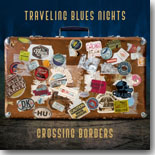 Longtime
Blues Bytes readers should be familiar with Tim
Lothar. The Danish musician has developed into
an excellent blues singer, songwriter, and
guitarist, with several of his releases still
favorites. Longtime
Blues Bytes readers should be familiar with Tim
Lothar. The Danish musician has developed into
an excellent blues singer, songwriter, and
guitarist, with several of his releases still
favorites.
In
2012, Lothar performed at a festival in Szolnok,
Hungary, where he encountered Hungarian
harmonica ace Tamás Szabó on stage and the two
became fast friends. Lothar toured with Szabo
and his band, the Mojo, and eventually released
a live album called Traveling Blues Nights
in 2016, followed by 2019's Old Cinema
Session, recorded live in an abandoned
cinema in Budapest.
Along the way, Danish
songwriter/singer/guitarist Jesper Theis joined,
and the ensemble, called Traveling Blues
Nights, has toured Denmark several times
since 2018 and built quite a European following.
Their newest release, Crossing Borders,
captures memorable moments from a Danish
performance in February, 2024, plus one song
recorded during a 2021 concert in Szolnok.
The
band consists of Lothar (vocal/resonator
guitar), Theis (vocal/accoustic guitar), Szabó
(vocals/harmonica), János Mazura (tuba), István
Mezöfi (drums), János Horvath (vocal/acoustic
guitar), and Olivér Imre Honfi (vocal/electric
guitars/diddley bow/electric mandolin).
The
opener, Lothar's “Love Song,” is the track that
was recorded in Hungary. It's a warm and gentle
track featuring Lothar on guitar and Szabó on
harmonica. Next is a rousing take on Gus Cannon
and his Jug Stompers' “Bring It With You When
You Come” that features the entire band. The
gritty “Going To The Rathole” is a Theis
original track with interesting instrumental
work that includes a tuba solo from Mazura.
The
upbeat shuffle “Hey Little Lee” was originally
recorded by Slim Harpo in 1968 as the B side to
“Tip On In,” and the band's lively version
likely had the audience dancing in the aisles.
“The Tide Will Turn Again” is another Theis
original with an old time folk feel, and
Lothar's exuberant “Coffee & Wine,” which
appeared on his 2018 release More Stories,
is a cheerful tune that works well with a full
band (the original was acoustic).
Szabó and Honfi collaborated on the “Old Train
Song/Friend Of The Devil” medley, with the
harmonica wizard emulating a train during the
first two and a half minutes of the song before
launching into the fiery second half of the song
with plenty of lively guitar work joining the
harp to really drive the song along.
“Closing Time Blues,” from Theis, is a laid-back
track with Lothar on resonator that initially
sounds like it could have been a pre-war blues
recording, but jumps into an electric blues
workout that had to have been a crowd pleaser. I
love how they manage to fit another tuba solo in
as well.
The
closer, “Lonesome House,” was written by Swiss
bass/piano player Daniel Gugolz. It wraps up the
disc in fine fashion, allowing the musicians a
few moments in the spotlight.
Crossing Borders is a very enjoyable release
by a group of Danish and Hungarian musicians who
really know their way around the blues. The
Traveling Blues Nights project does a wonderful
job with their originals and cover tunes,
displaying marvelous musicianship, creativity,
and a great rapport with their audience.
--- Graham Clarke
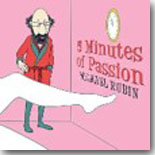 Since
he was 15 years old, Michael Rubin has
been playing the harmonica. That's 41 years, and
he's performed in multiple genres, from blues to
opera, even being featured in the Tony-nominated
The Civil War musical. Since
he was 15 years old, Michael Rubin has
been playing the harmonica. That's 41 years, and
he's performed in multiple genres, from blues to
opera, even being featured in the Tony-nominated
The Civil War musical.
Now
based in Austin, he's played with artists Ruthie
Foster, Cyril Neville, and others and counts
Gary Primich, Paul Butterfield, Rice Miller, and
James Cotton as influences. It was the late
Primich who inspired Rubin to become a
songwriter, and he's released two albums of his
own material, the first being I'll Worry If I
Wanna in 2022.
Rubin's second release, 5 Minutes of Passion
(Many Hats Records) features 11 originals with
Rubin joined by musicians Greg Izor (harmonica),
Guy Forsyth (banjo), Cesar Crespo, Josh Fulero,
and Matthew Smith (guitars), Jason Corbiere
(drums), Michael Archer (bass), Emily Gimble
(keys), Sweet Gary Newcomb (pedal steel), Paulo
Santos (saxes, clarinet), and Patrick Harwell
(trumpet, trombone). The McMercy Family provides
backing vocals on selected tracks.
Rubin's songwriting is a bit different from
standard blues fare and the album is all the
more fun for it. The opening track is “Dirty
Words,” featuring Forsyth on banjo along with
the McMercys (Lindsey Verrill, Dan Grissom, Ted
Hadji, Ryan Conlin, and Wilson Marks), whose
vocals open the song, sounding like a classic
Dixieland jazz number. Rubin's vocals are a
sing/talk combination that remind me a bit of
Lou Reed's delivery and they work well with his
lyrics.
“Doo
Doo Daa” is an impressive instrumental that
really gives Rubin a chance to put his harp
chops on full display, along with Crespo on
guitar. The rhumba “Big If” ponders what could
and couldn't be. and features a nice sax solo
from Santos along with more sharp harp from
Rubin.
“Alien in a Chair” is a spacey, rocking shuffle
that includes other-worldly slide guitar from
Fulero backed by Crespo,. The humorous title
track offers slightly spicy advice on seducing a
woman, while “Dig That Ditch” really swings with
nice West Coast-flavored guitar from Crespo
supporting Rubin's fine harp playing.
“Little Circus Town” is a somber tune that leans
more toward the rootsy side of blues, but the
amusing blues shuffle “Gravity” picks up the
pace with its political commentary. The rocking
blues track “Nap” discusses a subject that I've
become more interested in pursuing in recent
years.
“Propaganda” is a mostly-instrumental number
with Izor playing chromatic harp and Rubin
playing diatonic harp around a fuzzy two-line
lyric, and “Grudge,” the closer, is a tasty
shuffle with angry but funny lyrics about not
letting go of any wrongs previously inflicted.
Michael Rubin is a harmonica master for sure,
but he's also a great songwriter that gives us
several memorable tracks on 5 Minutes of
Passion. This is an album that any blues fan
should enjoy.
--- Graham Clarke
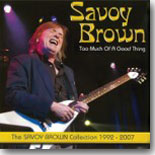 Savoy
Brown was a blues-rock powerhouse from 1965
until founder Kim Simmonds passed away in 2022,
having released over 40 albums and touring
pretty much non-stop for six decades. Simmonds
was the only constant in the band, and he really
seldom shifted away from their potent mix of
blues and rock. Savoy
Brown was a blues-rock powerhouse from 1965
until founder Kim Simmonds passed away in 2022,
having released over 40 albums and touring
pretty much non-stop for six decades. Simmonds
was the only constant in the band, and he really
seldom shifted away from their potent mix of
blues and rock.
It
would be quite a challenge to craft a collection
of the band's high points over 57 years and 40
albums, but the recently reissued Too Much of
a Good Thing: The Savoy Brown Collection
1992-2007 (Panache Records) selects 14
stellar tracks from that 15-year period.
The tracks are
not in chronological order, but are arranged
according to feel, similar to the format of a
regular album or a live performance. There are
three tracks selected from 1992's Let It Ride
and three Simmonds originals, the instrumental
“Flat Out,” the mid-tempo “Yesterday's Blues,”
and “Feel Like Crying,” a slow blues
instrumental. On these tracks, Simmonds is
backed by Pete McMahon (harp/vocals), Andy
Ramirez (bass), Joe Pierleoni (drums), and Rick
Jewett (keyboards).
From 1995's
Bring It Home, there's a swampy cover of
John Lee Hooker's “Little Wheel,” with Simmonds
providing gritty fretwork backed by McMahon on
harp and vocals, Jim Heyl on bass, and Dave
Olson on drums.
1999's The
Blues Keep Me Holding On delivers five
tracks: “Going Down To Mobile,” a Delta-flavored
blues written by Simmonds and bassist/vocalist
Nathaniel Peterson, Willie Dixon's “That's All I
Want Baby,” which has the feel of a '60s British
blues rocker, the title track, also written by
Simmonds and Peterson, a rocking cover of Lowell
Fulson's “Monday Morning Blues,” and “She's
Leaving,” written by Simmonds.
At the time of
this release, Savoy Brown consisted of Simmonds
(guitar), Peterson (bass/vocals), and Tom
Compton (drums). Guest artists on these tracks
are Duke Robillard (guitar), Leo Lyons (bass),
Paul Oscher (harmonica) and Dave Maxwell
(piano).
Two tracks come
from Savoy Brown's 2003 Blind Pig release
Strange Dreams: the mellow blues “Keep On
Rolling” and the funky rocker “When It Rains,”
both written by Simmonds, who takes the vocals
on both of these tracks. He's backed by Gerry
Sorrentino (bass), Dennis Cotton
(drums/percussion) and David Malachowski (rhythm
guitar).
The same lineup
is present for “Where Has Your Heart Gone,” a
live slow burner from the band's 2004 release,
You Should Have Been There, that features
some fine Simmonds guitar work.
2007's Steel
offers two tracks, and both are hard-edged
rockers: the Simmonds-penned “I Don't Remember
You” and a wild cover of Lowell Fulson's “Monday
Morning Blues.” Simmonds again handle vocals and
guitar, with Sorrentino and Cotton returning on
bass and drums, respectively.
The title track
is a swinging blues shuffle, previously
unreleased, that was recorded live at the House
of Blues in Boston in July of 2000 with Simmonds
on guitar, Peterson on bass and vocals and “T”
Xiques on drums.
The final
incarnation of Savoy Brown, (Simmonds, bassist
Pat DeSalvo and drummer Garnet Grimm) lasted
from around 2011 until Simmonds' death. DeSalvo
and Grimm toured with singer/guitarist Sean
Chambers and cut an album in 2025.
Kim Simmonds did
his part to help keep the blues alive for almost
60 years, continuing to release recordings on a
consistent basis the entire time. For Savoy
Brown fans who may have drifted away after their
early releases, they will find that Too Much
of a Good Thing proves the legendary
guitarist continued to produce great rock-based
blues well into the 21st century.
--- Graham Clarke
 Who
says you can't have a summer blues anthem? Allow
me to present “Cape Cod Girl,” from Alan
Arena (Alan Arena Records), a sun kissed
blues burner that's bound to have beach dwellers
doing the Watusi in the sand. Who
says you can't have a summer blues anthem? Allow
me to present “Cape Cod Girl,” from Alan
Arena (Alan Arena Records), a sun kissed
blues burner that's bound to have beach dwellers
doing the Watusi in the sand.
Arena is joined
by Monster Mike Welch, who provides outstanding
guitar throughout, Brad Hallen (bass), Marty
Richards (drums), Brooks Milgate (piano) and
“Sax” Gordon Beadle (baritone and tenor sax),
along with vocals from Joe Russo. It's a
rollicking good time that reminds you of all
those great summer tunes that used to hit the
radio every year.
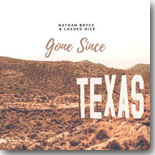 Nathan
Bryce and Loaded Dice recently issued the
single “Gone Since Texas,” a potent mix of
blues, soul, and Southern rock that's based on
an actual occurrence in Bryce's life that he
relayed to songwriter Candace Crockett. It's a
sad tale of the end of a relationship that takes
place later for one than the other. Nathan
Bryce and Loaded Dice recently issued the
single “Gone Since Texas,” a potent mix of
blues, soul, and Southern rock that's based on
an actual occurrence in Bryce's life that he
relayed to songwriter Candace Crockett. It's a
sad tale of the end of a relationship that takes
place later for one than the other.
Bryce's emotional
vocal threads the needle between rock, country,
and the blues and his guitar work punctuates the
pain he's experiencing. This is a strong track
that should appeal to listeners across several
genres.
--- Graham Clarke
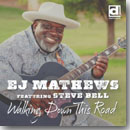 The
Delmark Records folks made a very interesting
discovery while attending the 2026 International
Blues Challenge in Memphis when they heard the
amazing voice of blues storyteller EJ Mathews.
They quickly signed the East Texas native and
got him into the studio with harmonica ace Steve
Bell. The
Delmark Records folks made a very interesting
discovery while attending the 2026 International
Blues Challenge in Memphis when they heard the
amazing voice of blues storyteller EJ Mathews.
They quickly signed the East Texas native and
got him into the studio with harmonica ace Steve
Bell.
The
result is an astoundingly good single, the slow
blues "Waking Down This Road," a song that will
immediately endear the listener to this man's
raw, rugged voice.
We
need to hear more from EJ Mathews, so hopefully
a full album will be in our hands real soon.
Another very nice single out recently comes from
California blues man Greg Nagy, with a
slow, bluesy cover of the iconic song "Georgia
On My Mind." Many will wonder why still another
version of this tune is needed, but that thought
will immediately leave your mind as soon as you
hear Nagy singing those familiar words.
I
hesitate to compare Nagy's rendition to that of
Ray Charles, but I can't help but hear the same
emotion and phrasing. It's worth multiple
listens.
--- Bill Mitchell
|